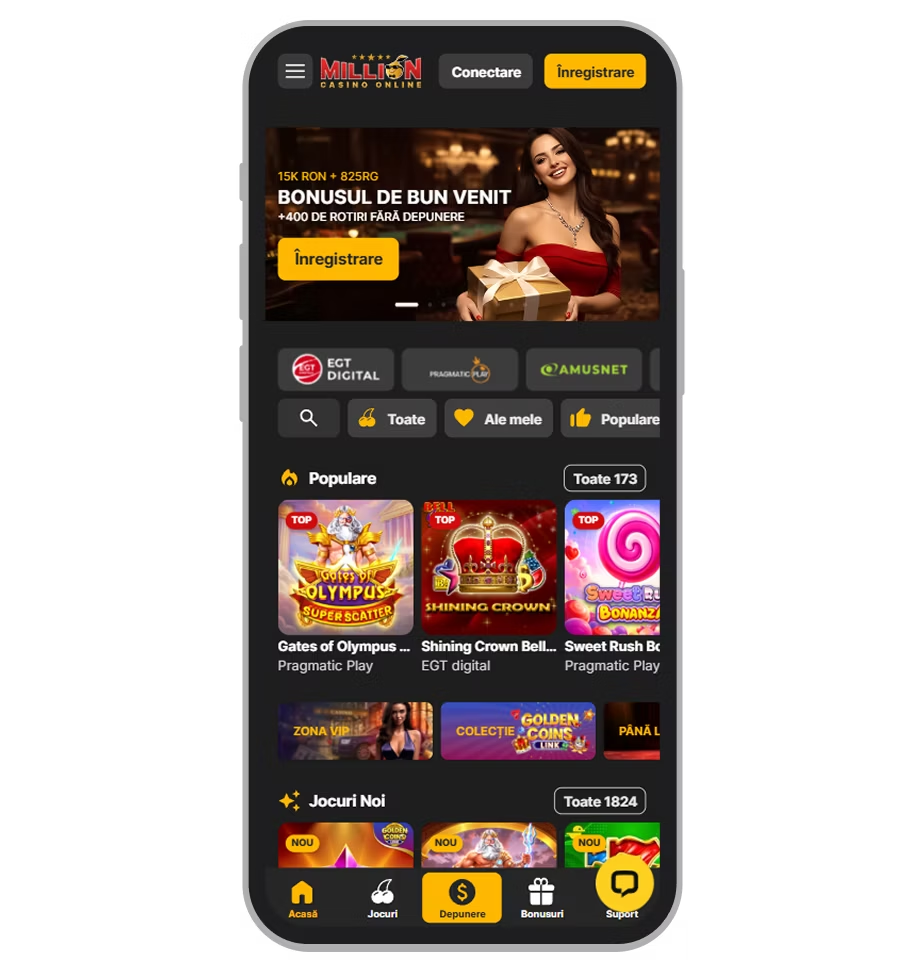
Million Casino App In France

In 2026, the Million Casino app in France helps to play, track balance, set limits and request help easily.

Fortune Gems 2 Slot

Table of Contents

  • The Dog House Megaways Slot
  • Lucky Joker 10 Extra Gifts Slot
  • Sword of Ares Slot
  • Floating Dragon Hold & Spin Slot
  • Leprechaun Riches Slot
  • Fruit Cocktail Slot
  • The Dog House Megaways Slot
  • Sword of Ares Slot
  • Fruit Million Slot
  • The Dog House Megaways Slot
  • Fruit Box Slot
  • Big Fisherman Slot
  • Seven Books Unlimited Slot
  • Million Casino Fortune Slot
  • Sword of Ares Slot
  • Floating Dragon Hold & Spin Slot
  • 9 Mad Hats Slot
  • Floating Dragon Hold & Spin Slot
  • Big Bass Splash Slot
App 1

Discover The Million Casino App Experience In France

On mobile, everything happens in a few gestures. You open the app, check your balance, start a game, then return to your day. Imagine you're in a café, five minutes before an appointment: you don't want to search through ten menus, you just want to access the essentials and leave.

In France, Million Casino is available for an adult audience, with controls and settings designed to avoid surprises. The right reflex is to explore the account area before playing “for real”: you can see where the limits are, where the history is, and how to contact support without searching for an eternity.

What makes an app pleasant is not the quantity of options, but the clarity of the paths. If you always know how to return to the wallet, your settings, and the help page, you play more serenely, even when the session is short.

First Launch: The First 60 Seconds

The first minute sets the tone. Imagine launching the app on the subway and the screen offers too many choices at once: you might click randomly. Take a simple approach instead: account, security, wallet, then games.

Take a mini-guided tour by yourself. Open the settings, locate the pause tools, and check that you understand how the history displays operations. Even if you're not playing yet, this "cold" minute helps you avoid improvising later.

Navigation: Favorites, Search, History

On the phone, scrolling can become tiring. Imagine searching for a game for three minutes, then already getting annoyed: that's not the best way to start a session. Use search, filters, and especially favorites to reduce noise.

The history is not just a log. It also shows your behavior: how often you return, how long you stay, if you constantly change games. This clarity helps you adjust your pace, without telling yourself stories.
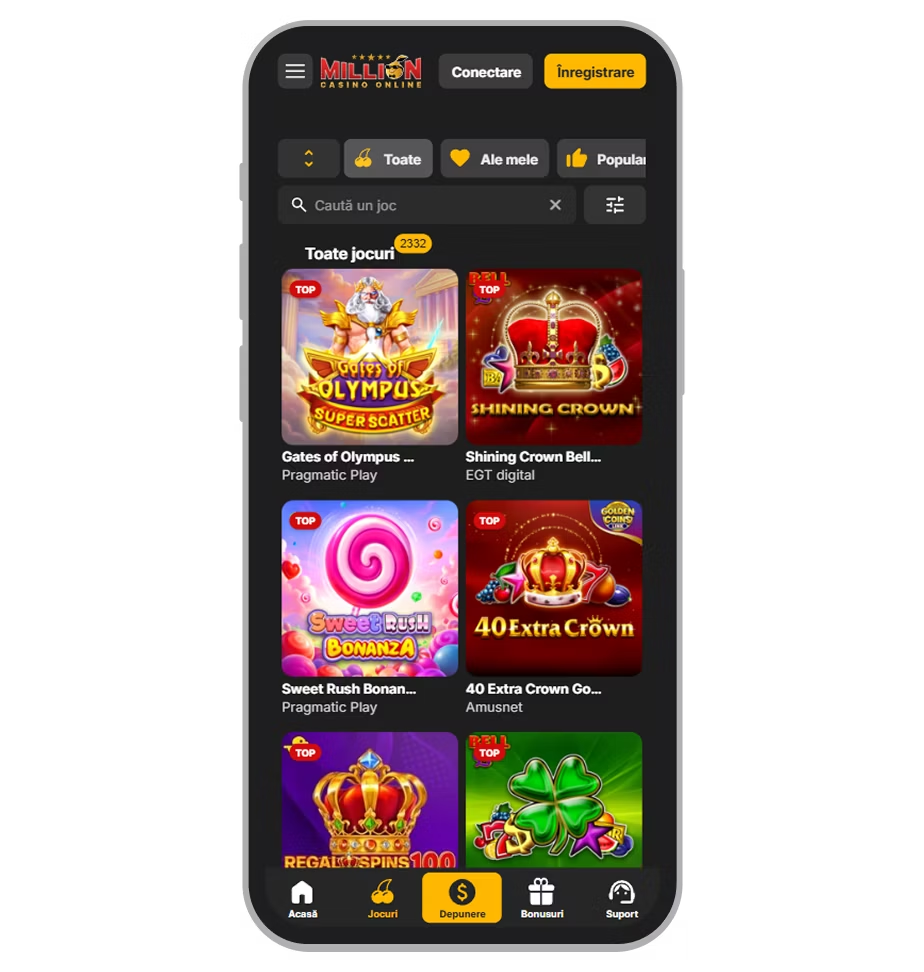
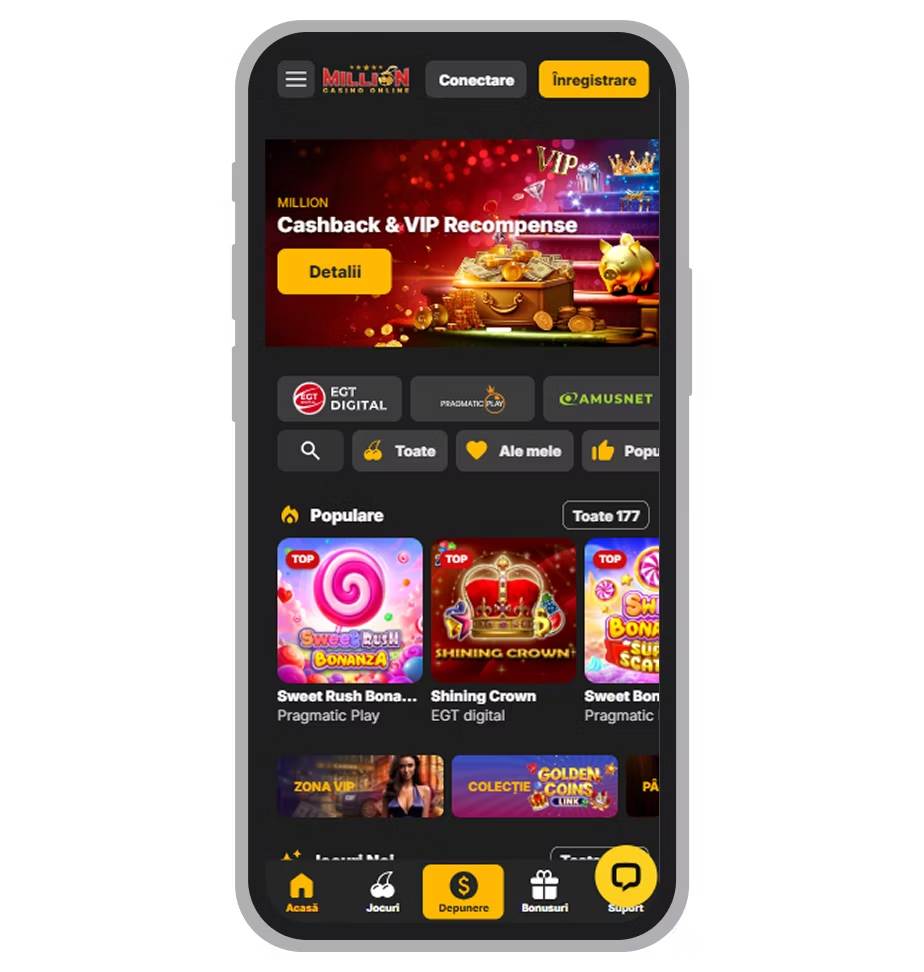
Stress-Free Installation and Updates

Installing an app is easy, unless you do it under bad conditions. Imagine a 9% battery, an unstable network, and notifications piling up: the slightest pause looks like a bug. The most effective way is often to choose a quiet moment, then do a clean installation, all at once.

app 2

In 2026, updates also play a role. They can improve stability and security, but they require a minimum of space. Keeping a memory margin and activating updates at the right time avoids "surprises" just before a session.

Prepare Your Phone Before Installation

Before starting the installation, do three quick checks. Imagine freeing up some space, closing heavy apps, and switching to a stable connection: you've just avoided the majority of blockages.

Also think about screen lock. A game account must remain personal. If you place your phone on a table, automatic locking and strong authentication reduce risks without complicating your life.

app 3

Create an Account and Log In Properly

Registration is a mundane moment, but it's where problems arise when you rush it. Imagine filling in your information while talking to someone, making a mistake, and then forgetting what you entered. Result: you spend more time recovering access than playing.

Treat account creation as a short, focused action. Two minutes, no more. You enter consistent information, choose a strong password, and then mentally note where the important settings are. It's a routine, not an exam.

Next, immediately go to the settings that protect your comfort. Many players wait until "later" to set a limit or a session reminder. Imagine an evening when you're tired: "later" becomes "never," and the session drags on. If you activate these tools from the start, you no longer have to fight impulses.

Logging in on mobile can also be disrupted by small details: device change, public network, cookies, or cache. If you feel access is becoming erratic, the best response isn't to tap frantically. Imagine closing the app, checking the network, and then returning: one clean attempt is better than ten nervous ones.

In France, the platform is for adult players and applies rules common to digital services. Specifically, this may mean additional confirmations when you perform sensitive actions. It's not "against you"; it's a safety net. The trick is not to change ten settings at once, otherwise you won't know what triggered what.

Finally, create your "startup ritual." Before each session, check your balance, verify your limit, and then start the game. Imagine doing the opposite, starting to play directly: you might realize too late that you didn't have the right intention.

Payments and Withdrawals on Mobile

Money is where stress quickly rises. Imagine you've just finished an intense session and want to "hurry" to deposit or withdraw. Your attention is already compromised, and that's where mistakes happen: double-click, wrong amount, changing method at the last moment.

The simple rule: separate gaming and transactions. Deposits and withdrawals are best done when you are calm. Perform an action, check the status in the history, then stop. This discipline seems basic, but it reduces confusion and frustration.

Here's a practical guide to keeping control of the steps, without using jargon.

Realistic Situation

What You Check First

What Causes the Most Errors

Simple gesture

Deposit in progress

Transaction history

Clicking again during loading

Check once, then wait

Balance not updated

Connection and refresh

Multitasking and unstable network

Close and reopen calmly

Withdrawal "pending"

Account status and messages

Modify info mid-process

Let the status evolve

Payment method

Data consistency

Changing method too often

Keeping a main method

Need help

Exact screen and message displayed

Vague message to support

Describe the path taken

Deposit: A Short And Clear Routine

A deposit should feel like a small gesture, not an emotional decision. Imagine depositing to “catch up” after a losing streak: that’s rarely a good sign. Instead, set a session limit, choose a comfortable amount, confirm, and then return to the game if you’re still in a stable state of mind.

The effective routine has four steps: open the wallet, choose the method, check your limit, confirm. Then, you look at the history. If everything is recorded, you don’t touch anything else.

Withdrawal: Follow the Status Without Multiplying Attempts

A withdrawal is a request followed by a status. Imagine the screen slowing down and you double-tapping: you create doubt about what has been sent. Make a single request, check that it appears in the history, and then let the system work.

If a message asks you for a specific step, do that step, then come back later. Changing methods, modifying your profile, and resubmitting the request within the same minute is the perfect recipe for getting lost.

Profile Checks: Anticipate Rather Than Endure

Checks go better when you do them when you’re calm. Imagine discovering a confirmation request when you’re in a hurry: you rush, you restart, you get annoyed. It’s better to set aside five minutes, on a single device, and follow the steps in order.

By 2026, this type of check will be part of normal online service operation. The important point is to remain consistent: stable information, only one change at a time, and documents prepared when requested.

Security, Limits, and Pause: Maintaining Control

The real luxury on mobile isn’t playing everywhere, it’s being able to stop everywhere. Imagine an evening where you’re playing on the couch, a bit tired, and you feel yourself going on autopilot. Limit and pause tools exist precisely for that moment.

Control shouldn’t be dramatic. A session reminder, a spending limit, a temporary pause – these are comfort settings. The earlier you put them in place, the less they feel like a penalty.

In France, Million Casino operates within a framework of applicable rules and offers an experience for adult players. The right reflex is to treat these tools as basic settings, just like your screen brightness.

Limit Spending Before the Session

Setting a limit before playing changes the psychology. Imagine entering a session with an active limit: you no longer have to negotiate with yourself for every decision. You play within a framework, then you exit.

A simple rule helps a lot: don’t change your limits during a session. If you want to adjust, do it the next day, when the emotion has subsided. This delay prevents impulsive decisions.

Timeout and Self-Exclusion: When to Press Pause

There is a clear sign: you are no longer playing for fun, but to "finish better". Imagine repeating "five more minutes" several times. At that moment, a temporary break cuts the momentum and gives you time to reflect.

If you see the pattern repeating over several days, a stronger barrier may be useful. What matters is not the word, but the effect: removing immediate access when your mood dictates instead of you.

Support and Troubleshooting: Get a Helpful Answer

Support works when you provide facts. Imagine writing "it doesn't work": you will receive general answers, then you will have to specify, and the conversation will lengthen. If you describe the screen, the action, and the message, you get straight to the point.

Before contacting, perform three quick tests: check the connection, close and reopen the application, then consult the history. Sometimes everything is already recorded, and your stress comes just from a slow display.

When you write, stick to one problem at a time. And if you are annoyed, take a break before sending. Two minutes of calm can save you twenty minutes of back and forth.

Frequently Asked Questions

Install under good conditions: stable connection, correct battery, a little free space. Imagine launching the installation on an unstable public network: you multiply interruptions and believe in a non-existent problem. Once the app is open, immediately locate the account, wallet, and security settings, and only then start a session.

Start with a spending or deposit limit and a time reminder. Imagine a short session stretching out because the rounds go fast: a reminder brings you back to your plan without debate. Set these limits when you are calm, and avoid changing them while you are playing, otherwise you are following emotion instead of your intention.

This can be due to slow refreshing, an unstable network, or an application that needs to be restarted. Imagine being on the go and the connection changing every two minutes: the display may be delayed. Close the app, come back, then check the transaction history rather than clicking everywhere, as the history is often more reliable than the home screen.

Decide on the session budget before opening the wallet. Imagine depositing to "catch up" after a bad streak: you risk exceeding your own comfort. Have a short routine: choose the method, check your limit, confirm once, then check the history. If you feel annoyed, stop before confirming.

First, check the status in the history and any associated message. Imagine the screen loading slowly and you resubmitting the request: you create confusion. Make a single request, let the status evolve, and if a step is requested, perform that step and then recheck later. Keeping a primary method also helps avoid back and forth.

When you notice that you are playing on autopilot or repeating "just a little more" without pleasure. Imagine a tired evening where you mechanically continue: a break cuts the reflex and gives you back control. It is not a failure, it is a practical decision to protect your time and your budget.

Describe the exact path: where you were, what you did, and what you saw on the screen. Imagine the difference between "it's bugging" and "after logging in, I open the wallet and the screen closes": the second message is immediately actionable. Add the approximate time and stick to one topic, you will get a clearer and faster response.